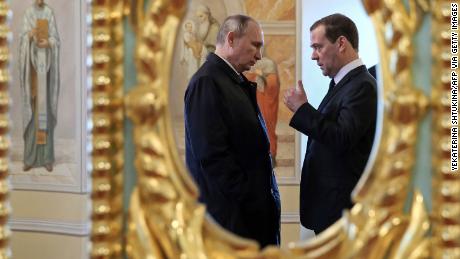
When Russia's entire government resigned on Wednesday, even long-term Kremlin observers were taken by surprise.
Earlier in the day, Vladimir Putin had announced his plan to push through reforms that would make his successor as president less powerful, by redistributing power in such a way that the Russian parliament and office of prime minister will have greater clout.
He thanked the resigning members of the government for their service, but said that "not everything worked out."
In the last two years, Putin's approval ratings have taken a dip, partly a result of unpopular pension reforms and a stagnating economy. 2019 was also riddled with street protests over municipal elections as Russia's fragmented opposition expressed discontent with what they see as a president and the ruling elite that have overstayed their power.
However, as the exact details of this mass resignation -- led by current prime minister and former president Dmitry Medvedev -- unfurled, it was clear that this was no protest at Putin's proposed reforms.
In his statement on the government's resignation, Medvedev indicated that it was doing so in order to make life easier for Putin.