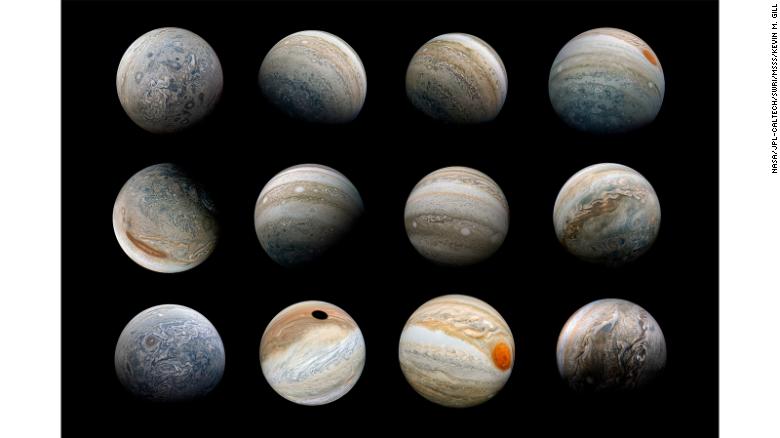
Since 2016, the Juno spacecraft has circled Jupiter, scanning the atmosphere and mapping its magnetic and gravitational fields. It's also carrying JunoCam, a camera specifically designed to record images of the poles; areas of the gas giant not previously well documented.
"We do not have a formal imaging science team on Juno, so we have turned to the public to help us out," says Candice Hansen-Koharcheck, Juno co-investigator responsible for JunoCam.
The amateur astronomy community assists with planning, she explains, determining when JunoCam should photograph the planet and where. Once images are sent back to Earth, the public has access to raw data, which, with a little photo editing know-how, have been processed into some of the most stunning images yet seen of Jupiter.
"I don't know what we would do without them!" says Hansen-Koharcheck. "Over the past two years we have come to rely on them ... as important members of our virtual team."
Among the most prolific and noted submitters are people working in the scientific community.